Thursday, March 22, 2012

5 Points on Television

Episodic television dramas (Page 180)

Spartacus is an example of episodic television dramas
The creation of these dramas allowed writers to experiment with different types of storytelling. This was one of the big "game-changers" when it came to television and new shows. I, personally, think it was very important due to the fact that these dramas can escalate to movies, book-adaptations, and can bring in much revenue through merchandising. These shows are mesmerizing because of their ability to draw in viewers with an intellectual drive that loves to be challenged.

Jersey Shore; one of the more popular reality shows

Reality (Page 185-186)

Reality TV was an advancement in television because it formed a new genre which allowed television companies to produce shows, that people would watch, for a lower budget than the sitcoms and dramas already on their networks. I believe it was an important advancement in television because it's cheap and draws in large audiences, who doesn't love drama every now and then?


Cable Television (Page 186)


Cable television was a huge advancement. with cable, stations were able to broadcast films, series and documentaries which addressed controversial issues; basically things that couldn't be shown on public television. I believe this was important because this gives people another way to learn more about world issues, as well as political policies and the inner workings of the government. I've seen more than enough political documentaries as well as documentaries on cable that I wouldn't normally see on public television, like something relating to heavy drug use/abuse for example.


Comedy (Page 183)
The Big Bang Theory is one of my favorite shows and a good example of comedies

Comedy shows/sitcoms were a great advancement in television. With the entrance of comedy to the scene companies were able to address social issues. Through comedy, men and women can laugh and inadvertently learn because the information is shrouded by jokes. The book gives the example of M*A*S*H, which addressed the closing of the Vietnam war. I find comedy important because its the perfect mechanism for almost everything, these sitcoms will make you laugh, cry and feel a series of emotions. I have learned my fair share of social and economic issues through comedy shows.


Four big TV networks (Page 182)

The big four television networks were NBC, ABC, CBS, FOX. These four companies offered a large range of television shows, ranging from news to sports. The four big networks were important because they helped the advancement of television through the evolution of new programs and genres. I find this important because these large companies have grown to a size where more opportunities than usual have risen because of all the sub-companies and interests within them.


Bibliography;


Thursday, March 15, 2012

5 Points on Film

Hybrid Films
The old generation of killer car movies shouldn't have existed in the first place; the only thing scary about this movie is the gas mileage


When I speak about Hybrid films I mean Hybrid Films, not the film, Hybrid, (which is utterly stupid in my opinion.)


Hybrid films are films that tell a story, but in an unconventional way. Such as the Lion King (1994)! A combination of music and animation, which isn't too rare by today's standards, but was one of the first of the Hybrid film generation that I feel will never end. Hybrid films do well in the box office, usually, because of their ability to attract at least 2 different types of audiences. As a child, I loved cartoons, and I still do! But musicals, and random bits in movies and shows where the characters would burst into song, and yet it would still be normal, were my most despised enemy besides my vegetables. But by combining both animation and musical tendencies, Disney had the ability to introduce a generation of children and young adults into the "musical world." (Of which, for me, did not work).


Cross-Genre Films


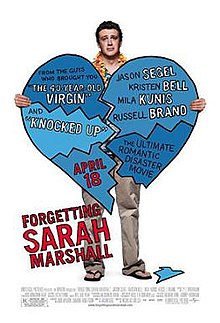
Cross-Genre films are usually what I end up watching when I flip to FX or any sub-channel of HBO. Cross-genre films are easily defined by a few examples, such as "Romantic Comedies" or "Horror-Thriller," etc. Basically a film that can be categorized more than once! Once again, I find  that movies like this have the ability to reach multiple target audiences at once. Say your girlfriend wants to watch "The Notebook," and you want to watch, oh I don't know, "Bad Teacher?" There's a possibility of you both just settling on a Romantic Comedy, like "Forgetting Sarah Marshall," or "I Love You, Man." (I suggested those two because I tried to think of Romantic Comedies I like, it's completely unrelated that Jason Segel stars in 3 of my 4 suggestions....Well not completely unrelated, he's hilarious). Regardless, these cross-genre films are what I always watch, I can never watch a movie that's specifically one genre, (well I could, but honestly I can't even  find those anymore).


Blockbusters


Well, this is exactly how it sounds, and I'm not talking about the video chain that was seemingly extinct during the past 4 years as Netflix rose from the trenches to steal it's spot. Blockbusters are giant productions, with giant budgets. I'm sure whether or not you've seen it, you've heard of Avatar and it's incredible budget. (Spoiler alert: it was an estimated 237 Million dollars) But these blockbusters are expected to do well, very well. Avatar was a good example of that, making approximately $2,782,275,172 (Worldwide). Now if you ask me, that sounds pretty successful. But although financiers sink in huge amounts of money for these films, they don't always turn out as well as Avatar did. The newest Disney movie out, John Carter, didn't do too well. I mean it did, but not well enough. With an estimated production value of $250 Million and a $30 Million opening the first week, it's not starting out too well, and unless everyone's been hiding under a rock since March 11th, it most likely won't make any more than the $30 Million opening week. There's two examples of blockbusters, one failed, one successful, and hopefully you'll be able to see why blockbusters are so important in film. It's basically a huge gamble but, in this case, you can't stop when you're ahead.


Kaiju and Samurai Cinema


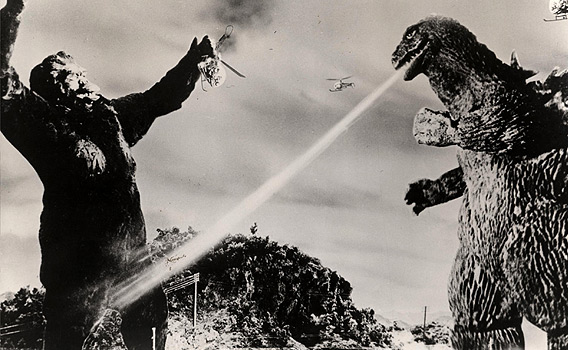
I know what you're thinking, it sounds like a type of sushi (Kaiju actually is a type of Sushi), but it refers to Asian monster/strange creature flicks. I would hope you've heard of Godzilla before? If not, Godzilla's a large, fire/laser-breathing dragon/dinosaur/very large reptile that puts almost any other sci-fi/fantasy creatures to shame. There is also Samurai Cinema, warrior films which put your lack of Judo knowledge to shame. I mention these two types of movies because they, no doubt, inspired many American films we have today, and numerous films which are still in production. These films were beneficial in spreading Asian culture through and around America.


Special Effects


Now, I don't know how much of special effects I'll have to explain, and I wouldn't think the average person wouldn't know why special effects are important and how they've advanced cinema as we see it today, but I'll go ahead and explain anyway. Special effects, sometimes just referred to as FX (like the station), are what make men in costumes into 60 story monsters, and in the case of Honey, I Shrunk the Kids,(Microkids! in Japan) make men and women smaller than ants. Special effects make movies cooler, there's no doubt about it, but they also help depict accuracy in situations that cannot be recreated physically. For example, in a war movie, I don't care how accurate the director wants to be, actually shooting your actors is masochistic and is no doubt illegal, but using special effects, that same character can get blown up, shot, stabbed, cut up, and reappear in the next scene, granted those four examples don't specifically advertise the accurate depictions I started off describing, but a couple actual examples of accurate depictions are Saving Private Ryan and The Day After Tomorrow. Both can not be recreated, only, physically, they require the assistance of computer generation.


Bibliography;


Thursday, March 8, 2012

My 10 Favorite Films

Silent Hill 

"SHARKBEAR"
Silent Hill is a movie based on a series of games by Konami entertainment. Though the movie didn't stack up quite as well to the series, I find it one of my favorite movies of ALL TIME. It didn't overdo any gore like most horror movies do, and I like CGI creatures, (so you must know I was ecstatic seeing video footage of Sharkbear) But Silent Hill, the movie, was a great film adaptation, which isn't seen that often anymore. Most movies based on a game or a comic book eventually destroy the franchise because of its terrible or inaccurate adaptation. Sort of how Peter Parker's boss would keep making Spiderman look like the villian, but in this hypothetical and metaphorical situation, Spiderman actually does become the villian. (Sorry if that's confusing, I wrote it while singing along to this episode of Spongebob)


Dead Silence


Dead Silence may be one of my favorite films specifically because I always feared that every puppet or doll that surrounded me was alive and secretly watching me, almost like a murderous Toy Story. This movie isn't so much a murderous Toy Story though, as all the puppets are the toys of a ventriloquist by the name of Mary Shaw. Cast out by the town she lived in after a child heckler at her show went missing, Mary Shaw haunts the old town and makes it known her death was just a brief intermission. 

Besides the plot, a memorable part of the movie is the nursery rhyme themed song you occasionally hear throughout the movie.

"Beware the stare of Mary Shaw
She had no children, only dolls
And if you see her in your dreams
Be sure you never, ever scream "


Insidious was one of those possession movies that has become all the rage with today's movie scene. But I feel that this movie has bragging rights, due to its unusual nature of the out-of-body experience that they flaunted in this plot.


Resident Evil; Apocalypse

The second movie in the Resident Evil, videogame/movie, franchise. It details Alice, the main character, and her continuation to try and take down the Umbrella Corporation. The Umbrella Corporation was creating viral weapons and created a new strain of viruses which formed a whole new, "zombie revolution."

Resident Evil; Afterlife

Some would call it a problem that I like so many movies based off of videogames, but there's a certain sensation when the character you played as is featured on the big screen. Afterlife left me hanging on for more, especially because the next installment won't be on the silver screen until later this year...much later. Without any spoilers, Alice(s) modified the game of life portrayed by the movie and the main villian, Wesker. 


Superbad

Superbad is the stereotypical teen movie, which isn't as stereotypical as thought, mainly because I still like it. Superbad portrays a couple of teens trying to lose their virginity and stars Jonah Hill and Micheal Cera. The casting was seemingly perfect. Micheal Cera is always perfect for the role of awkward teenager, because he has such an awkward aura about him. And Jonah Hill gives off the aura of desperation, in his stilted conversations with women and awkward and rude encounters with anyone who isn't Micheal Cera. 

Paul 

A movie about an alien who crash landed to earth, turned comical by the British minds of Simon Pegg and Nick Frost. It had an even amount of sadness in the love you felt for the bonds the characters had, balanced with the comedy, in which jokes stemmed from references and fart jokes. 

Pirates of the Caribbean: The Curse of the Black Pearl

The first in the series, which made me fall in love, was Curse of the Black Pearl. Detailing the curse that plagued the crew members of the Black Pearl. The movie inspires the inner pirate in me. Not the swordplay, that could kill me, but the rum and singing in brothels is something I could get used to. Scurvy not so much.


Pirates of the Caribbean: Dead Man's Chest

Dead Man's Chest, movie number 2, describes Jack Sparrow's debt to Davy Jones, which he deviously sends Will Turner to pay. As ransom until he can get the heart to control Davy Jones, Will works on the Flying Dutchman, while Jack gathers 99 souls to pay his debt to Jones. I love the graphics and the introduction of a new character that they made seem as realistic as an octopus-man can. 

Pirates of the Caribbean: At World's End

The third movie in the series describes the trials and tribulations of Captain Jack Sparrow and Will Turner and Elizabeth Swan. In this movie, Davy Jones is finally taken down, after he is controlled by an English general who has control of his heart. By the end of the movie, Will Turner is decreed the new captain of the Flying Dutchman. This leads to the most current movie, which I loved, possibly even more. 


Bibliography; 


Thursday, February 23, 2012

Uses of Radio and it's importance


Communication


Radio communication has been one of the most important parts of the invention of radio. From being able to radio your fellow soldiers, to just messing around on the HAM radio and making new friends, Radio communications were used worldwide and created a whole new world; that I believe, paved the way for the expression used in the creation and manipulation of the internet.


Navigation

Lately, radio transmissions have been used widely in navigation. Navigation is widely used for personal uses, I believe, because there are more people with navigation apps on their phone, with, of course, much less security and thoroughness as a government source. Navigation is perfect for locating the bad guy, whether he’s a block away or a state. And by now, most people have GPS systems in their car, to take them on brand new adventures.


I personally know how helpful it is, considering the maps application on my phone basically guides me through whatever path in life I need to take…that isn’t philosophical. Navigation is something everybody needs, it doesn’t matter how experienced of a traveler you are, and you can always take the wrong turn.

Radar
Radio waves were also used in the creation of the Radar. It isn’t just that cool green and black blinking circle you see in war movies, but they are used widely on commercial boats and aircrafts. Fishermen don’t always have that green thumb, or in this case, blue thumb (?), regardless, radar’s help in finding things such as fish or enemy ships.

 But the only thing I’ve used radar for is for when I lose my phone, which more often than not, happens on a weekly basis. It is, however, one of the most important inventions in both wartime and commercial use.


Commercial Radio


One of the most important parts about radio, what most people know about it, is the fact that they play the tunes that everyone just can’t get out of their heads! But besides that, they spread a less, than usual, bias than most television stations. I, personally, love to start off my day with NPR.

It’s a news station, based in every city I believe, that speaks mostly about local news, as well as arts and music, and occasionally plays music, both current and classical. Commercial radio has benefits of “enlightenment” and musical enjoyment that you can blast through your windows while you ride past your old high school bragging about the fact that you don’t drive your parents station wagon anymore.
Amateur radio also falls in this category, where local “heroes” can protest their “terrible” community; small community usually, because most people need a license to broadcast, and most people do it out of their garage, not their studio apartment.

HOT

One lesser known use of radio waves is heat, though its not as important as some people would think, I personally believe it was one of the most important uses possible for radio. Especially because with my hectic schedule I usually need to use radio waves to heat up my food, cup o’ noodles doesn’t fix itself. 


Bibliography;
Thursday, February 16, 2012

Music and it's Ultimate Benefits (MassCom)

Make Believe Ballroom

1934 was the time period when radio started playing music. Also known as the "Make believe ballroom," but trust me when I say this was much more important than your sister's "Make believe ballroom" with Reginald Teddy Bear the Fourth. 


My terrible editing job, but then again who edits something like this?
This was influential because it spread those cool tunes farther and more often. if it wasn't for the music revolution of radio, artists wouldn't be as widespread, as quickly, around the nation, except through touring. Also if it wasn't for the creation of the Make Believe Ballroom I would be more musically stunted than a caveman in a fishbowl. Why a caveman in a fishbowl? Why not?


Music Recording and Ability to Playback


My prime example of this low-tech P2P Sharing is That 70's Show
The new ways of listening to music started from the record, which had diminished sound every time the needle hit it, to tapes, which lost their groove slower, but just as sure. The major companies of 1947, Columbia, Victor, Decca, Capitol, MGM, and Mercury were ecstatic with the sales of their records. But soon realized that with recorded music comes peer-to-peer sharing. Though low-tech at the time, telling your friend you got this sweet new record and hanging out in your basement to listen to it took away from record sales. As your basement became the usual hangout spot for your group of friends, so did your peer-to-peer sharing of records, leaving you only to buy a record every blue moon. I personally still do this in my apartment to date, we just hook up our computers to speakers and blast music to the critical ears of whoever's sitting around. 


Dance Crazes 


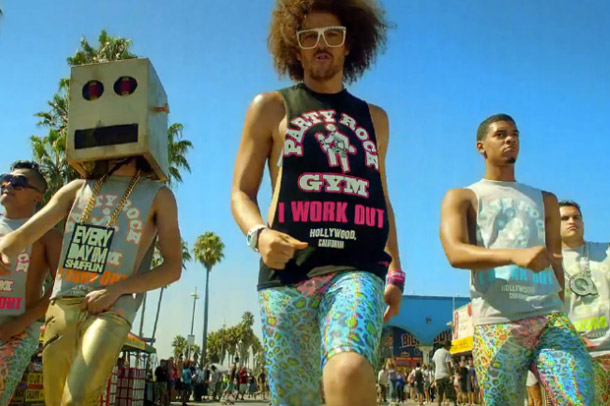
Shuffling on the other hand requires more work
Though strange, dance crazes fuel the music industry. From the doo-wop to the Dougie, to Cranking That and Shuffling, dance crazes influence record sales worldwide. I can't tell you how many times I've watched Shakira's music video to try and learn to shake my hips like that (Although for masculinity sake I should say 0). Various dance crazes could determine the genre of music that becomes popular during any given week, month or year. I never learnt how to Dougie, but I taught myself how to Crank That Superman relatively easy. I love dance crazes, it gives me a reason to dance in public. Although when do  I ever need a reason to dance in public?

Sound Effects

An example of Hollywood voice-editing
Now when I say sound effects I don't mean the cliche laughing track on every sitcom from the 80s and 90s, or that *WHAP* sound when someone in a movie gets punched, I'm talking about engineering music, and altering it to have a certain sound, or effect. Artists like the Beatles or Jimi Hendrix were popular with their "psychadelic" sounds. And more often than not, tracks today are being altered heavily in order to sound "better," (if that's what you want to call it). The House music, techno, and electronica/dance genre relies heavily on these sound alterations. As well as certain singers and bands who use voice altering software to make their voice crispy clear and faker than a Hollywood movie set. I love house and techno music, but at some point T-Pains overexaggerated autotune gets on my nerves.


Culture

The emotions of a child and his cereal
The last, but most important part of music is culture. Music has always been a shared experience between groups of people, and has ventured out into a melting pot that is, today, our world. Music can express feelings about anything, whether it be the sadness you feel that your roommate ate the last of your cereal or because you just got dumped. The few great singers left today belt out songs about a sadness that we can relate to, or a happiness that we love to feel. I personally love Andy Grammar's upbeat Pop that makes me do a little dance in between every step I take until the next song comes on. After that I just Party Rock to LMFAO till I get to class. 


Bibliography;

Saturday, February 11, 2012

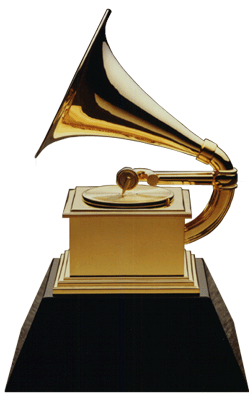
The Grammy's: Who will win? Who would I vote for? (MassCom)


Record Of The Year

For Record of the Year I would vote for Katy Perry, Firework.. 
When this song came out, I'm not ashamed to admit it, it played on repeat for at least a week with other Katy Perry tunes. The winner of Record of the Year will probably be Adele though, she's gained widespread recognition for being a new artist, hot to the scene. Personally, she isn't one of my favorites out of new female singers today.

Song Of The Year


For Song of the Year I would have to vote for All of the Lights.This is one of those songs that makes me just want to get up and do something. And with a combined songwriting staff featuring Kanye West, Rihanna, Kid Cudi and Fergie, how can you go wrong? Although I feel again that Adele may win this title due to her recent sparks in popularity off of her new album 21.


Album Of The Year

Album of the year I feel may go to Lady Gaga, as she has spiked in popularity, due to her controversial songs and appearances.  I enjoyed Lady Gaga's album, but I enjoyed Rihanna's a little bit more.  The album title describes the way I listen to every track, Loud. I may be a little biased, however, considering my favorite rapper used to be Eminem and he happens to be starring on the CD in a track or two. 


Best New Artist


For Best New Artist I would have to give it to J. Cole. There's no Saint John's bias (He went to Saint John's) , I believe his tracks are catchy and represent something more than himself; a worldwide audience. I enjoy Skrillex, but I don't believe he catches audience diversity as well as J. Cole does. 

Best Pop Solo Performance
 For best Pop Solo Performance I would vote for Fireworks by Katy Perry again. I never really liked Bruno Mars too much, I feel Adele to be over-hyped, though she does have a beautiful voice. Lady Gaga is running dry in my opinion, but Pink on the other hand is my second choice. I was a Pink fan since her first album, when I still rocked that CD Player. I enjoy Katy Perry more just because of the upbeat attitude of her songs, even when they're sad. 

Thursday, February 2, 2012

Main Ideas/ Revolutions of the Printing Age

Main Ideas/ Revolutions of the Printing Age

1. The Penny Press


Now when you hear penny press, it's not those adorable elongated coins you used to beg your parents to give you change for so you could go home with a bizarre souvenir. (Such as pictured to the left)
No, the Penny Press was far different. It revolutionized literacy through its 1 Cent papers. And if you've learned anything about America in the past however many years you've studied advertising and marketing, you'd know that we love anything cheap and abundant. I mean that's why everyone gets so many chicken nuggets when they go to McDonalds, right? Or is that just me? The first Penny Press newspaper was named "The Sun" and was published in the Big Apple in September of 1833. Leave it to New York to publish the first newspaper...and fill it with tabloids!

2. Godey's Lady's Book

Now this may not seem like a "revolution," but I'm definitely sure that this was an accomplishment. Godey's was the first woman's magazine. Godey's was created, at first, to cater to upper class women with a taste in beauty, proper etiquette, fashion, and popular fiction at that time. Godey's had soon surpassed it's suggested class, and had spread to the lower and middle class as well, selling upwards of 150,000 copies.  With their large fan base, the magazine had a substantial influence on the woman's liberation movement.

3. Postal Act of 1792

The Postal Act of 1792, I feel, revolutionized the print age even further than my past mentions,. The Postal Act secured mail deliveries, but more importantly, allowed the delivery of newspapers. 

So when you wake up on Saturday morning, do your routine of the morning stretch in your robe in the fresh air, and bend down uncomfortably in the presence of your neighbor mowing his lawn, you can thank the Postal Act of 1792 for allowing the delivery and widespread publication of your daily news. 

4. "Birth of a Novel"

Though it's not what's usually considered a "main point" I find it really important and a fun fact how that 300 page novel you have to read for class came to be. Novels, were at first, published periodically in newspapers, piece by piece. Something like that is what I needed to help me prioritize my reading; if I can only read 10 pages a week, then you'd be right in guessing I'd finish all my reading assignments on time. (Sadly that's not the case, and I have to read 5 chapters of a science textbook I need to write a paper on)

5. Industrial Revolution

I'm really not trying to give you a history lesson here, but these dates were very important in shaping media as we see it today, primarily the print section of media, or what is left of it today. The desire the many new immigrants had to succeed in this new state of urbanization lead to an increased literacy rate. Because if you can read, why won't you be one of the top choices for that new job that was created specifically for people that can read? Newspapers had to adapt to the changing times between the 18th and 19th centuries and changed their headlines from social elites to middle class urban workers, who would benefit from and use more often, the newspapers of the times.  

For example, I would benefit more from the Storm Front or Torch St Johns Newspaper more than my dentist would.


Bibliography;
Information from:
Mass Media Revolution
  • Publisher: Allyn & Bacon; 1 edition (January 21, 2011)
  • Language: English
  • ISBN-10: 0205041736
  • ISBN-13: 978-0205041732
 Pictures from;